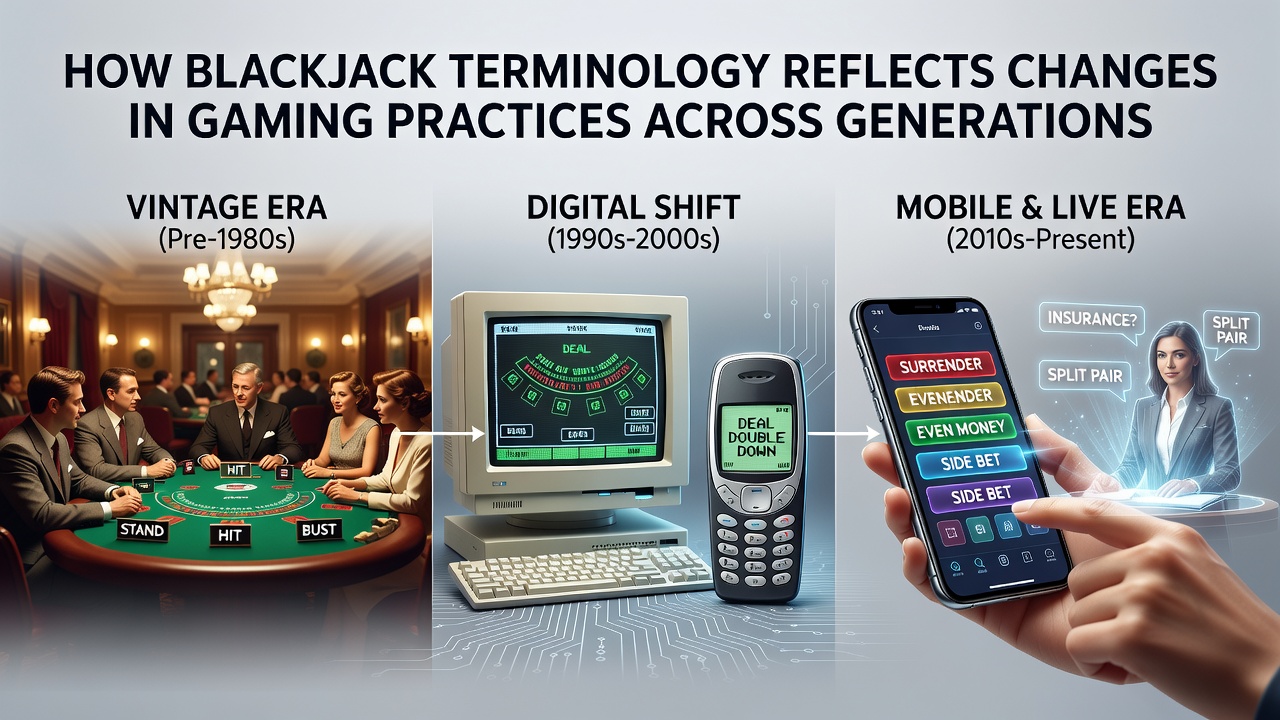
Tracing Generational Shifts in Blackjack Through Its Evolving Vocabulary
Blackjack terminology has shifted alongside broader changes in how casinos operate, how players interact with games, and how technology reshapes access across decades. Observers note that words once tied to physical tables and single-deck play gave way to phrases reflecting multi-deck shoes, automated shufflers, and digital interfaces as practices evolved from the mid-20th century onward. Research from gaming historians indicates these linguistic markers reveal transitions in deck management, player strategy tools, and regulatory environments that altered daily operations in casinos worldwide.
Early Terms Rooted in Physical Play and Single-Deck Norms
Terms such as "hit," "stand," and "bust" trace back to European variants of the game that arrived in North America during the 19th century, when play centered on one deck dealt by hand from a simple holder. Those who studied early casino records note that "blackjack" itself referred to a specific bonus payout for an ace and jack of spades, a rule that persisted in some riverboat and saloon settings before standardization altered payout structures. Data from archival sources shows single-deck games dominated until the 1960s, when rising player volumes prompted shifts toward multiple decks housed in a wooden or plastic "shoe," a term that entered common use as dealers began sliding cards from this device to speed up rounds and limit exposure to skilled counters.
Additional phrases like "push" for ties and "double down" emerged directly from table-side interactions where players signaled actions with gestures because verbal communication could interfere with the flow at crowded pits. Experts have observed that these expressions mirrored an era when oversight relied on pit bosses watching every hand, a practice that changed as surveillance technology advanced and altered both security protocols and the language around table supervision.
Mid-Century Expansions and the Language of Strategy
By the 1970s and 1980s, terms connected to card counting such as "high-low system," "true count," and "deck penetration" entered circulation as researchers published mathematical analyses of probability. Figures from the University of Nevada, Las Vegas gaming studies reveal that these concepts gained traction when casinos expanded to multi-deck formats, prompting operators to introduce continuous shuffling machines whose nicknames, including "CSM," reflected new mechanical interventions designed to reduce the effectiveness of tracking methods. People who tracked industry reports note that language around "comps" and "player ratings" developed in tandem with loyalty programs that casinos implemented to retain high-volume visitors amid growing competition across Las Vegas and Atlantic City properties.
Digital Transitions and Online-Era Additions
Once internet platforms appeared in the late 1990s, vocabulary expanded to include "RNG" for random number generator, "virtual table," and "session limits," terms that described software-driven mechanics replacing physical cards and human dealers. A report issued by the Nevada Gaming Control Board in 2024 documented how regulatory frameworks adapted to these systems, requiring operators to certify algorithms and disclose return-to-player percentages, which in turn introduced phrases like "certified RNG" into player discussions. What's notable is that these additions coincided with regulatory bodies in multiple jurisdictions, including those in Australia and parts of Canada, mandating clearer disclosures that changed how participants spoke about fairness and verification processes.
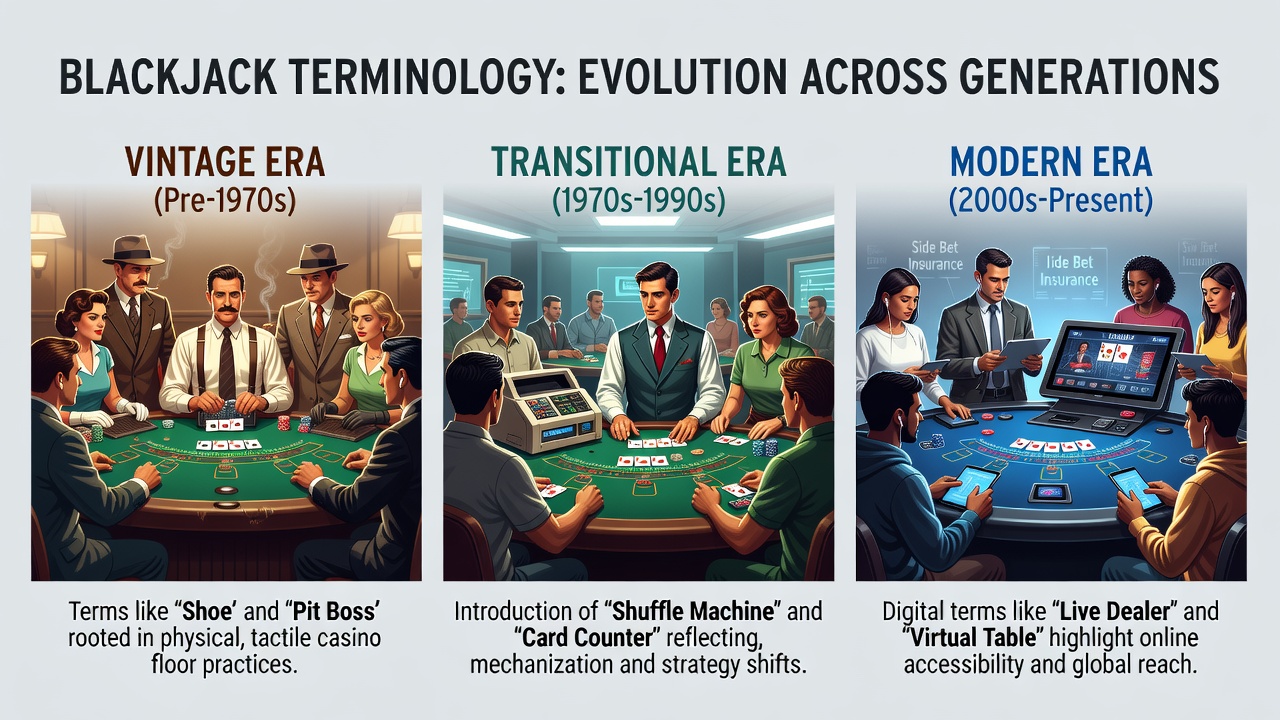
Further shifts occurred as mobile applications proliferated in the 2010s, bringing terms such as "tap to hit," "swipe to stand," and "auto-hold" that described gesture-based controls on touchscreens. Research indicates these expressions reflect a move toward individualized, on-demand sessions that differ from the communal pace of land-based pits, where table minimums and dealer speed once dictated the rhythm. Observers note that phrases around "responsible gaming tools," including "reality checks" and "cool-off periods," entered widespread use following policy updates by various international regulators seeking to address extended play patterns enabled by always-available digital formats.
Recent Developments Approaching 2026
As of August 2026, discussions in industry forums reference emerging language around AI-assisted decision prompts and biometric verification steps that some platforms now integrate to comply with updated age and identity requirements. Terms like "AI coach mode" and "facial check-in" appear in technical documentation from developers adapting to hardware that supports real-time identity confirmation without interrupting gameplay flow. Data compiled by the Canadian Gaming Association shows these additions align with broader efforts to standardize player protections across borders while maintaining operational efficiency in both physical and remote environments.
Additional vocabulary continues to surface around hybrid models that blend physical tables with remote participation, though the core evolution remains anchored in how each generation's tools and rules reshape the words used to describe decisions at the table or screen. Those who follow regulatory filings across regions observe that terminology serves as a reliable indicator of when practices transitioned from manual oversight to automated systems, from fixed schedules to continuous access, and from localized rules to standardized international frameworks.
Conclusion
Blackjack terminology functions as a record of operational changes that unfolded across generations, from single-deck hand dealing to multi-deck shoes, from manual counting to algorithmic oversight, and from pit-side interaction to mobile interfaces. Each new phrase or adaptation corresponds to concrete shifts documented in regulatory reports, academic analyses, and operational records that together illustrate how gaming practices respond to technology, volume demands, and policy adjustments. This linguistic progression continues as new tools and standards emerge, providing ongoing evidence of the relationship between vocabulary and evolving casino environments.