The Interwoven Threads of Blackjack Terminology, Timeline Changes, and Table Rewards
Blackjack vocabulary carries traces of centuries-old European card games that crossed the Atlantic and adapted to new environments, and observers note how specific terms emerged alongside rule modifications that altered house edges and player options over time. Research from gaming historians shows that words like "vingt-et-un" from 17th-century France gradually gave way to "blackjack" in American mining towns during the 19th century, when bonuses for specific ace-and-ten combinations first appeared as incentives to attract more participants at tables.
Origins of Core Terms and Early Rule Adjustments
Terms such as "hit," "stand," and "bust" trace directly to decisions players faced when single-deck games dominated early American casinos, and data from period accounts indicate these actions tied closely to simple payout structures that rewarded conservative play with steady returns. Historical shifts occurred when casinos introduced multiple decks in the mid-20th century to counter card-counting techniques, which prompted new vocabulary like "shoe" to describe the device holding extra packs and "cut card" for the marker signaling reshuffles. Those who've studied casino records know that these additions coincided with adjustments in player incentives, including comped meals scaled to average bet size and duration at the table.
Double down and split options entered common usage during the same period of expansion, and figures from regulatory filings reveal how casinos promoted these moves through targeted bonuses that encouraged larger wagers while maintaining mathematical advantages. The phrase "insurance bet" arose specifically after rule changes permitted side wagers against dealer blackjacks, linking language directly to protective incentives offered at tables where multi-deck play had become standard.
Language Evolution Alongside Incentive Structures
As gaming expanded across regions, terminology adapted to reflect new reward mechanisms such as player loyalty programs, and reports from industry groups show that phrases like "high roller" and "action" began quantifying the volume of bets eligible for room upgrades or travel reimbursements. In Canadian provinces where provincial oversight governs casino operations, similar patterns emerged with terms like "match play" describing promotional chips that matched initial wagers up to set limits, and these incentives often aligned with vocabulary shifts that emphasized speed of play in faster shoe games.
European operators introduced variations using terms like "early surrender" and "late surrender" during regulatory updates in the late 20th century, and evidence from gaming association studies indicates these options came paired with adjusted comp structures that credited partial returns on certain hands to retain participants longer. Observers note that the word "pit" itself evolved from describing the enclosed dealing area to representing the hub where floor supervisors tracked player activity for incentive calculations based on hourly theoretical loss.
Contemporary Connections in June 2026 and Beyond
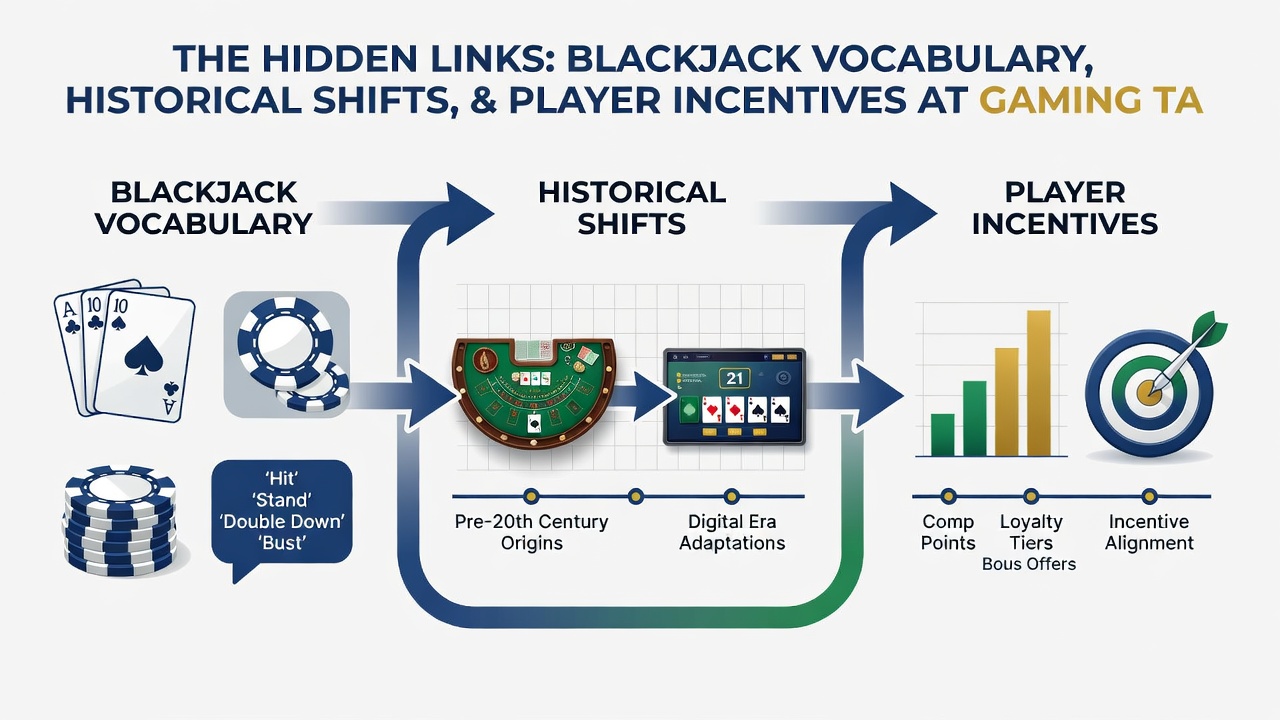
By June 2026, digital tracking systems integrated into physical tables continued to link vocabulary around "true count" and "deck penetration" with personalized incentive offers delivered via player cards, and statistics compiled by the Nevada Gaming Control Board demonstrate measurable increases in average session length when such rewards activate after specific hand patterns. Australian research institutions have documented parallel developments where terms like "push" and "even money" now appear in promotional materials that tie directly to loyalty point multipliers during peak periods.
Regional differences persist, with terminology in some markets emphasizing "soft hand" calculations that influence bonus eligibility under varying rule sets, while data from the European Gaming and Betting Association highlights how these linguistic distinctions support incentive programs calibrated to local tax and licensing requirements. The ball remains in the operators' court when it comes to aligning new table features with established language that players already recognize as signals for reward opportunities.
Case Examples from Gaming Operations
One documented instance involved a major resort that introduced "side bet" terminology alongside progressive jackpot incentives, and internal metrics revealed higher participation rates when announcements used familiar phrases rather than technical descriptions. Another example from North American properties shows how "burn card" references accompanied changes in shuffle procedures that affected comp qualification thresholds based on hands per hour. Those who track industry reports find recurring patterns where vocabulary updates precede incentive revisions by several months, allowing staff training to incorporate both elements simultaneously.
Conclusion
Terminology, historical adjustments, and reward systems at blackjack tables remain interconnected through documented developments across multiple jurisdictions, and ongoing data collection continues to map these relationships without altering core mathematical structures. Sources including the Nevada Gaming Control Board and the European Gaming and Betting Association provide consistent records of how language and incentives have co-evolved since the introduction of multi-deck formats.