The Evolution of Card Shuffling Algorithms in British Digital Twenty-One Platforms
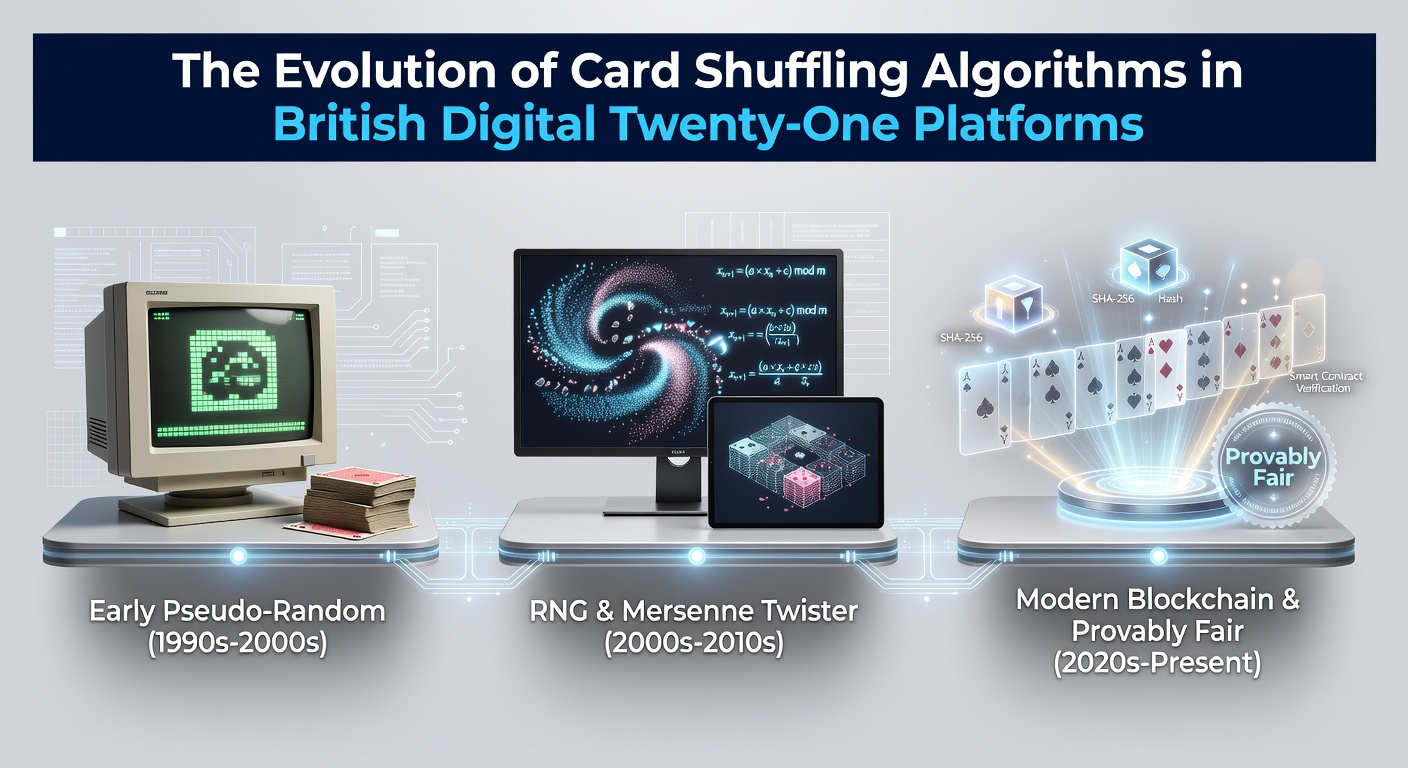
Digital twenty-one platforms in Britain have transformed how card shuffling occurs since the first sites launched in the late 1990s, and the shift from basic random number generators to sophisticated algorithms reflects broader advances in computing and regulatory demands for verifiable fairness. Early systems relied on simple pseudo-random sequences that drew criticism for potential predictability, yet developers quickly adopted more structured approaches to mimic physical deck mixing while meeting technical constraints of server environments.
Initial Approaches to Digital Shuffling
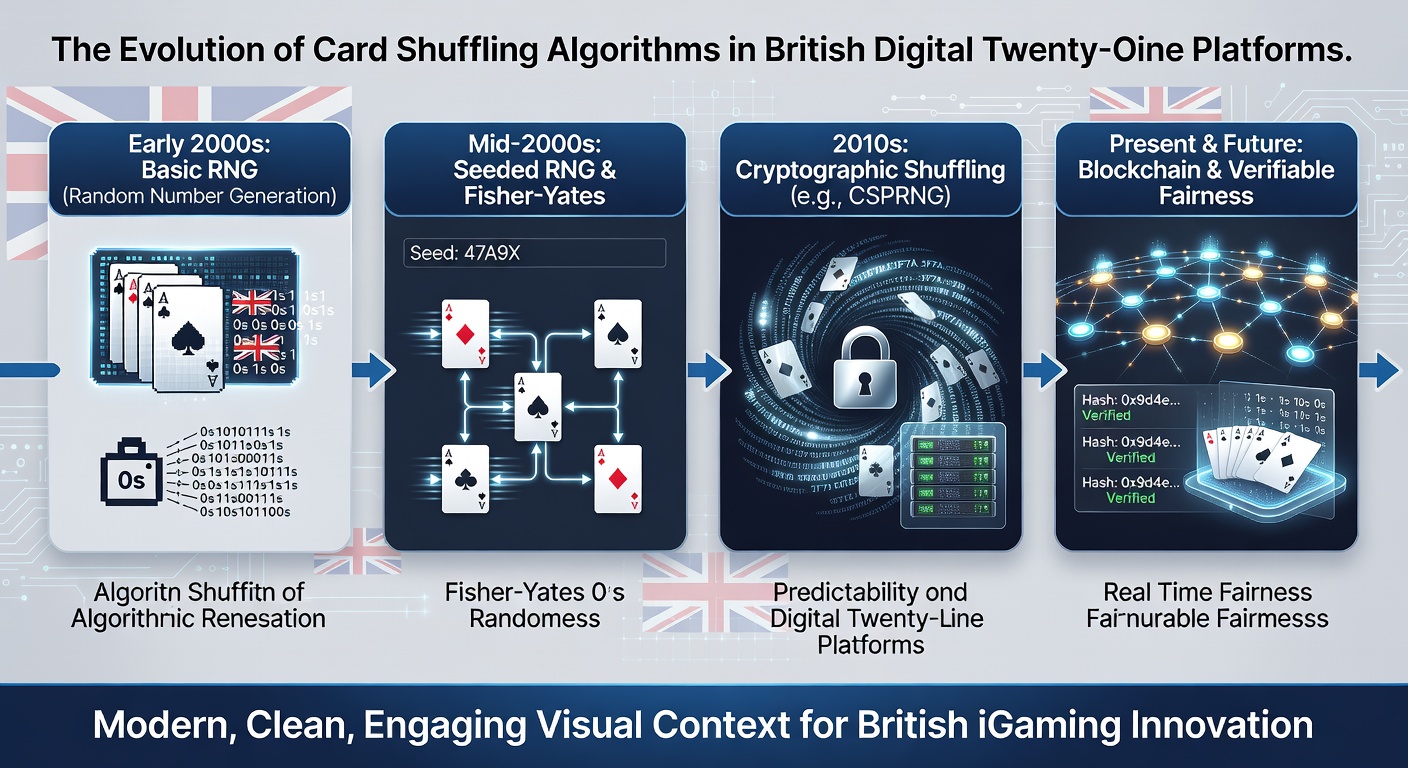
Researchers at several institutions explored basic implementations where linear congruential generators produced card orders, and these methods sufficed for early platforms because computational resources remained limited. Operators discovered that such generators sometimes created repeating patterns over extended sessions, which prompted a move toward improved techniques like the Mersenne Twister by the mid-2000s. Data from industry reports indicate that adoption rates for these updated generators rose steadily as platforms expanded their player bases across the United Kingdom.
One notable change involved integrating the Fisher-Yates shuffle algorithm, which ensures every permutation of a 52-card deck occurs with equal probability when paired with a high-quality random source. Developers applied this method because it avoids bias that older swap-based routines introduced, and testing by independent labs confirmed its reliability for repeated use in virtual games.
Advances in Cryptographic Security
By the 2010s platforms incorporated cryptographically secure pseudo-random number generators, or CSPRNGs, to address concerns about predictability that standard generators could not fully eliminate. These systems draw entropy from hardware sources such as thermal noise or timing variations, and they produce output that resists reverse-engineering even when partial sequences become available. Standards outlined by the National Institute of Standards and Technology provide benchmarks that many British operators now reference during system audits.
Platforms also began publishing shuffle seeds or using verifiable random functions so that players could confirm results after sessions ended, and this transparency measure gained traction following increased scrutiny from oversight bodies. What's interesting is how these features integrated wth existing game engines without introducing noticeable latency, since optimized code paths kept processing times under acceptable thresholds for real-time play.
Integration with Regulatory and Technical Standards
Regulatory frameworks outside the primary UK body have influenced algorithm selection, with examples including guidelines from the Malta Gaming Authority and the Alcohol and Gaming Commission of Ontario that emphasize entropy testing and periodic reseeding. Operators who serve British players often align with multiple sets of requirements simultaneously, which leads to hybrid implementations that combine several generator types for layered security. Figures from European gaming associations show that compliance-related upgrades accounted for a measurable portion of technology budgets between 2018 and 2024.
Academic studies on algorithm performance, including work published through university computer science departments, have examined bias metrics across millions of simulated shuffles, and results consistently favor CSPRNG-backed Fisher-Yates over legacy methods. These findings encouraged wider deployment, while platform engineers refined implementations to handle multi-deck variants common in twenty-one variants offered to UK audiences.
Emerging Developments Around June 2026
Expectations for June 2026 center on wider testing of quantum-resistant shuffling methods that prepare systems for potential advances in computing power capable of challenging current encryption schemes. Several providers have initiated pilot programs that layer post-quantum algorithms atop existing CSPRNG frameworks, and preliminary reports suggest these additions maintain speed while enhancing long-term resilience. Observers note that such transitions occur gradually because operators must validate each change against existing fairness certifications before full rollout.
Additional work involves real-time monitoring dashboards that flag statistical anomalies during live operation, allowing immediate reseeding if patterns deviate from expected distributions. Data collected through these tools contributes to ongoing refinement, and collaborative projects between developers and research institutions continue to explore entropy harvesting from player interaction metrics without compromising privacy.
Conclusion
The progression of shuffling algorithms in British digital twenty-one platforms demonstrates a steady response to technical challenges and external standards, moving from rudimentary generators to cryptographically robust systems that support verifiable outcomes. Continued investment in testing and adaptation ensures these methods keep pace with evolving computational landscapes, while references to international benchmarks help maintain consistency across jurisdictions. As platforms prepare for milestones such as those anticipated in June 2026, the focus remains on balancing security, performance, and transparency in every shuffle cycle.