Decoding Position Dynamics: How Seating Choices Shape Decision Patterns Across Digital Card Platforms
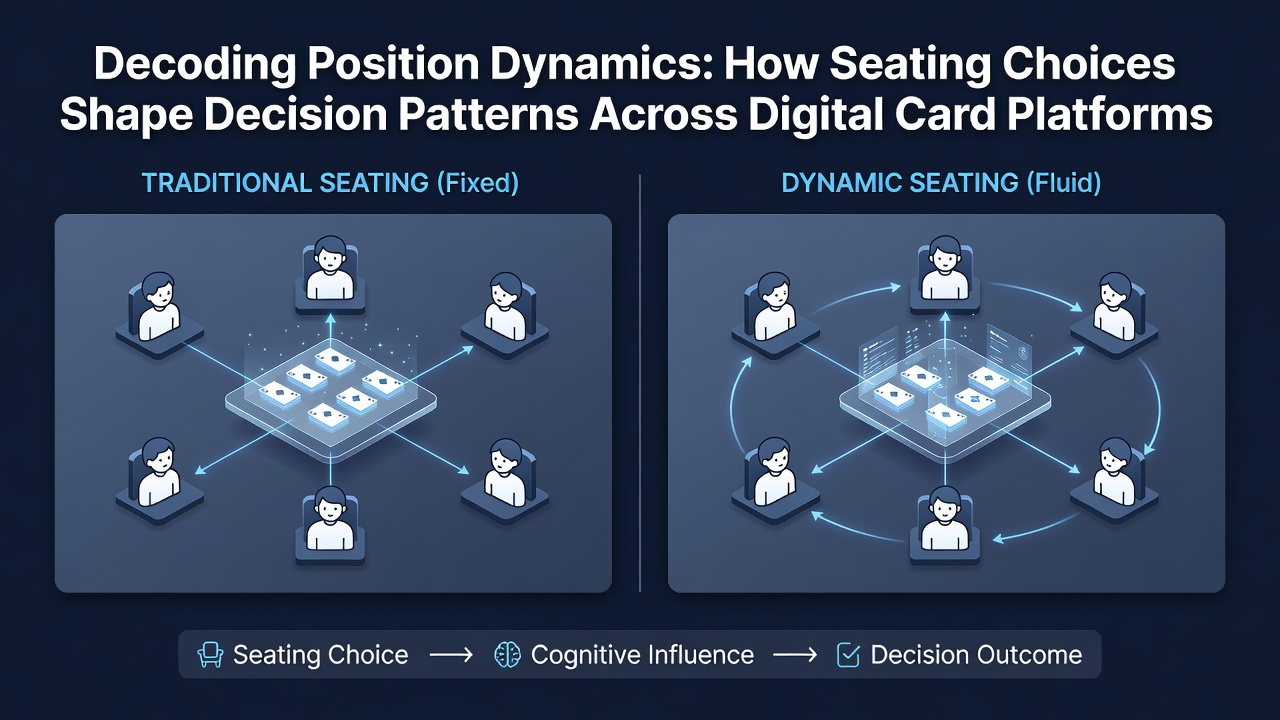
Position dynamics in digital card platforms refer to the structured order in which participants act during each round, a factor that determines information access and influences subsequent choices across poker, blackjack, and similar variants. In these environments seating assignments occur either through player selection or algorithmic assignment, which directly affects exposure to prior actions and available data before a decision is required. Data from multiple platforms indicates that early positions receive less preceding information whereas later positions benefit from observing multiple outcomes, creating measurable differences in betting frequencies and risk thresholds.
Structural Elements of Digital Seating Systems
Digital platforms organize tables with fixed position labels that rotate or randomize at the start of sessions, yet the underlying sequence remains constant: action proceeds clockwise from a designated dealer button or equivalent marker. Researchers at institutions such as the University of Nevada Reno have documented how this sequence produces distinct informational asymmetries, with position one encountering the highest uncertainty and position six or seven accessing the broadest set of visible decisions. Regulatory filings from the Nevada Gaming Control Board show that average session lengths and per-hand wager sizes vary systematically by assigned starting seat across thousands of recorded hands in 2025 and into mid-2026.
Platform algorithms often allow limited seat changes between rounds, yet once play begins the positional constraints lock in place for the duration of each hand. Those who study these systems note that interfaces display position numbers alongside avatars or usernames, enabling players to track their relative standing without physical movement. This visibility layer adds a layer of meta-strategy where participants adjust aggression levels based on the number of remaining actors rather than on card strength alone.
Observed Decision Patterns by Position
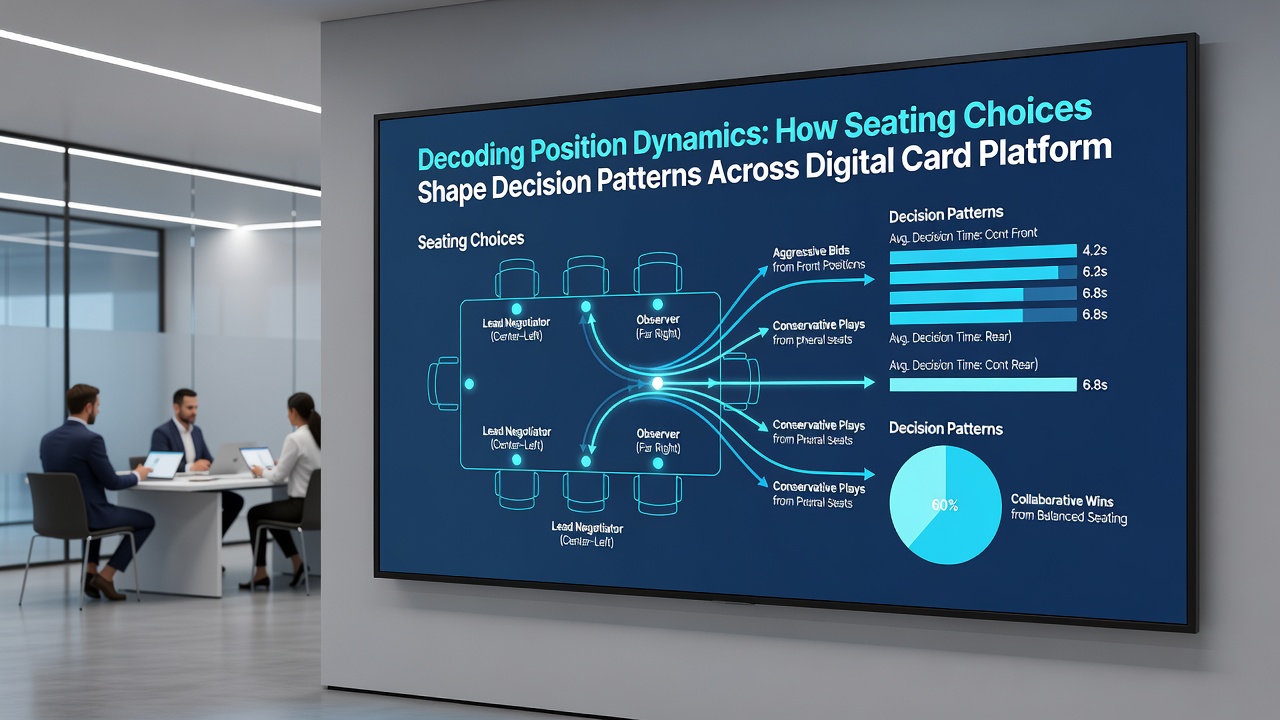
Analysis of aggregated gameplay logs reveals consistent trends: participants in early positions fold at higher rates when holding marginal holdings, while those acting later demonstrate increased calling frequencies even with similar card distributions. A 2024 report compiled by the Australian Gambling Research Centre examined over 2.3 million hands across multiple licensed sites and found that late-position raises occurred 18 percent more frequently than equivalent raises from early seats during the same period. These differences persist after controlling for stake levels and game type, suggesting the positional variable exerts an independent effect on choice architecture.
July 2026 updates to several major European platforms introduced real-time position heatmaps that overlay historical decision data onto current seating arrangements, allowing observers to identify emerging patterns without manual tracking. The feature draws from anonymized user data and highlights how middle positions often serve as transitional zones where players balance incomplete information against the actions already taken by earlier seats. Industry observers note that such visual tools have coincided with modest shifts in average aggression metrics, particularly in multi-table tournaments where position rotation occurs rapidly.
Platform Design Choices and Their Influence
Design teams at major operators configure default seating randomly while offering optional manual selection in cash-game lobbies, a choice that alters how users approach initial table entry. When random assignment predominates, early-position disadvantages distribute evenly across the player pool over time, yet individual sessions still produce localized effects on short-term outcomes. In contrast, manual selection enables experienced participants to target specific positions based on table composition and prior performance metrics displayed in lobby statistics.
Interface elements such as countdown timers and action prompts remain standardized regardless of seat, yet the psychological weight of acting first versus last produces measurable differences in time spent reviewing cards. Studies from Canadian research groups tracking session telemetry indicate that decision latency increases by an average of 2.4 seconds in late positions, reflecting the additional processing of visible opponent actions before committing to a choice. These timing variations appear across both desktop and mobile clients, suggesting the effect stems from positional information rather than device-specific factors.
Comparative Data Across Regions and Formats
Cross-border comparisons compiled by the European Gaming and Betting Association illustrate that North American platforms tend to emphasize random seating more consistently than their Asian counterparts, where certain high-stakes rooms permit repeated position requests within daily limits. Despite these structural differences, the core relationship between seat order and decision frequency remains stable, with later positions showing elevated raise percentages in both regions according to the 2025 aggregate dataset. Such consistency points to fundamental informational mechanics that transcend regional regulatory frameworks or cultural player bases.
Academic examinations of tournament structures further separate position effects from stack-size variables, revealing that short-stack participants in late positions adopt wider ranges than identical stacks located early in the order. This pattern holds after statistical adjustment for blind levels and remaining field size, underscoring the independent contribution of seating sequence to strategic adaptation.
Conclusion
Seating assignments in digital card environments create predictable informational gradients that shape the distribution of aggressive and conservative actions across thousands of hands each day. Platform features introduced through 2026 continue to surface these gradients through analytics overlays while preserving the underlying positional sequence that governs every round. Observers tracking these systems recognize that seat order functions as a structural constant amid evolving interfaces and regulatory landscapes, producing stable patterns that researchers continue to quantify across diverse formats and jurisdictions.