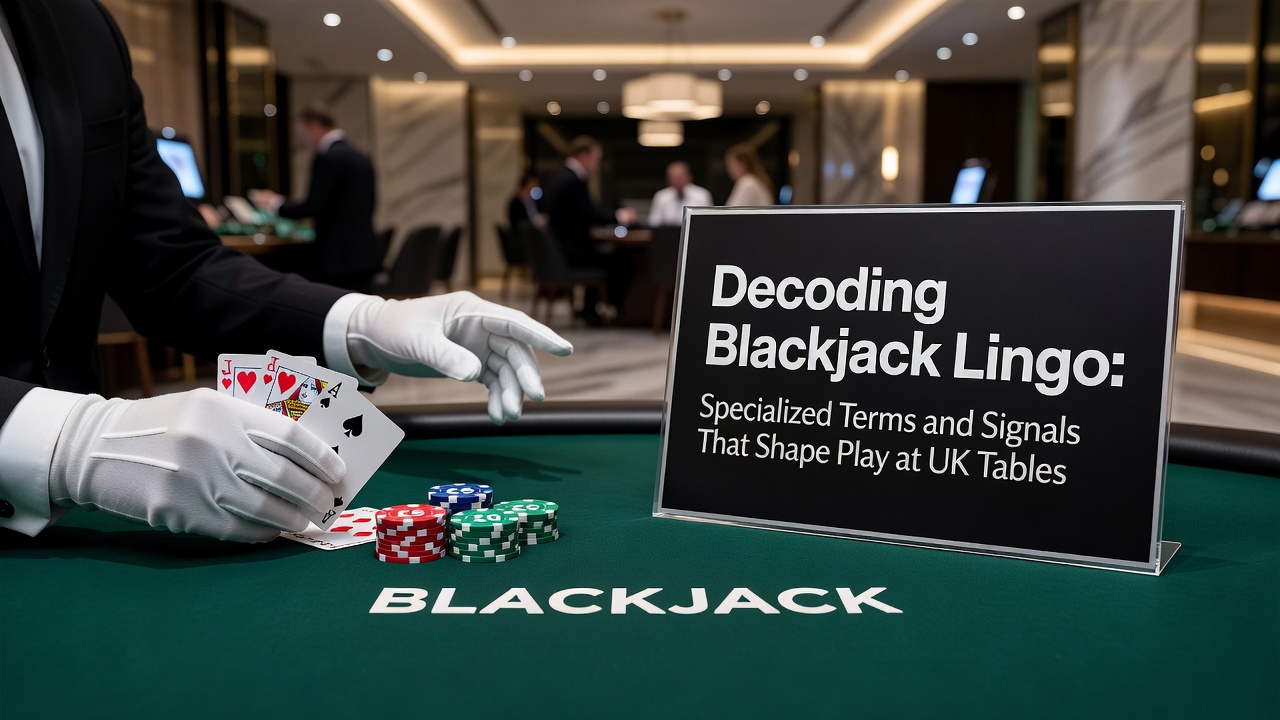
Decoding Blackjack Lingo: Specialized Terms and Signals That Shape Play at UK Tables
Blackjack tables at UK venues operate with a precise vocabulary and set of physical gestures that keep games moving efficiently while minimizing misunderstandings between players and dealers. These elements form the foundation of live play where verbal communication alone often proves insufficient amid casino noise and multiple participants at one table.
Core Terminology Used Across UK Blackjack Games
Dealers and players rely on standardized words that describe actions and outcomes during each round. A "hit" instructs the dealer to deliver an additional card while "stand" signals the end of a player's requests for that hand. "Double down" permits a player to increase the original wager by up to 100 percent in exchange for one final card only. "Split" allows separation of a paired hand into two independent wagers each receiving one additional card. "Insurance" refers to a side bet offered when the dealer's upcard shows an ace and covers potential blackjack losses for the original hand.
Additional phrases include "push" for a tied result where the wager returns unchanged and "bust" for any total exceeding 21. Observers note that "shoe" describes the device holding multiple decks while "pit" identifies the enclosed area containing several tables under one supervisor's watch. As of July 2026 industry reports from the American Gaming Association continue to track how consistent terminology across regions supports smoother operations at international properties including those in the UK.
Hand Signals That Replace or Supplement Verbal Commands
Physical gestures serve as the primary method for indicating decisions because they remain visible to surveillance systems and reduce disputes. Players tap the table surface once to request a hit whereas a horizontal wave above the cards indicates a stand. To double down participants place an additional wager beside the original bet and point with one finger. Splitting requires a similar additional wager placement followed by a vertical gesture separating the two cards. These motions occur after the initial two-card deal and before any further cards arrive.
Dealers confirm each signal by repeating the action or announcing the result aloud which creates a clear record for all parties. Research from the International Gaming Institute at the University of Nevada shows that standardized signals reduce errors by measurable margins in high-volume environments where multiple languages may be present among participants.
Specialized Phrases for Side Bets and Variations
UK tables sometimes incorporate options such as "21+3" or "perfect pairs" that carry their own descriptive language. A "suited" outcome means all relevant cards share the same suit while "connected" refers to sequential ranks. "Even money" describes the immediate payout offered when a player holds blackjack against a dealer ace instead of taking the insurance bet. These terms appear in rule placards at each table and dealers explain them briefly during slower moments.
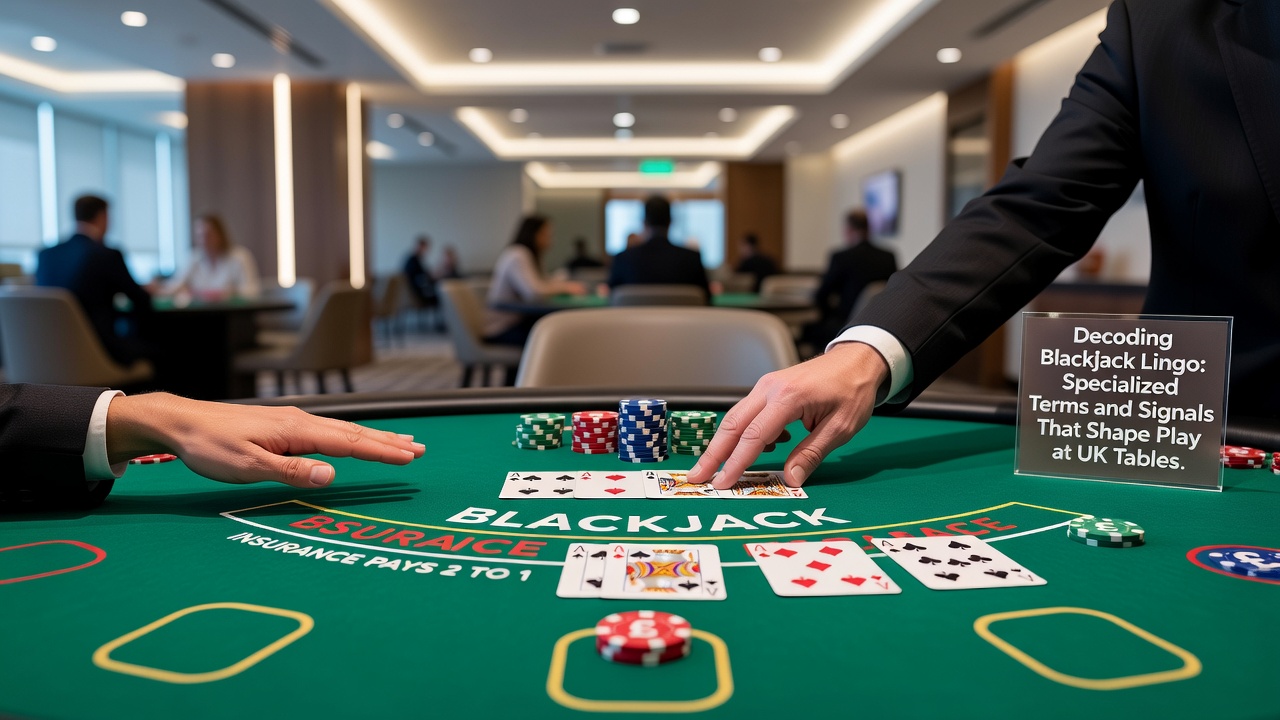
Figures from European gaming oversight bodies indicate that clear explanations of side-bet vocabulary correlate with higher player retention rates during evening sessions when table traffic peaks.
Table Etiquette and Communication Protocols
Players learn to wait for the dealer to finish distributing cards before signaling decisions which prevents accidental exposure of hidden information. Chips must remain stacked in clear view and wagers stay untouched once the first card leaves the shoe. When a supervisor approaches to resolve a question participants often hear references to "floor" decisions which means the ruling comes from the pit manager rather than the dealer alone.
Terms such as "marker" describe credit arrangements extended to approved patrons while "fill" refers to the delivery of additional chips to a table that has run low. These phrases appear routinely in daily operational logs maintained by casino staff across UK properties.
Regional Nuances Observed at UK Venues
Although core blackjack terminology remains consistent with international standards some UK locations retain older expressions such as "buy" for doubling down or "twist" in games that blend blackjack with pontoon rules. Dealers adapt quickly when tourists arrive from regions that use different phrases yet hand signals stay uniform to maintain order. Data compiled by the Canadian Gaming Association highlights how cross-border consistency in gesture language supports tourism-driven play without requiring extensive retraining for staff.
Conclusion
Mastery of blackjack terminology and signals allows participants to navigate UK tables with precision and supports the structured flow that casinos require. These elements appear in training manuals for new dealers and in player information booklets distributed at many venues. Continued adherence to established language and gestures maintains clarity even as table volumes fluctuate throughout the year.